
GPT-4o Was Never the AI Girlfriend
OpenAI retired GPT-4o and the backlash conversation is missing the point, and the opportunity, completely.
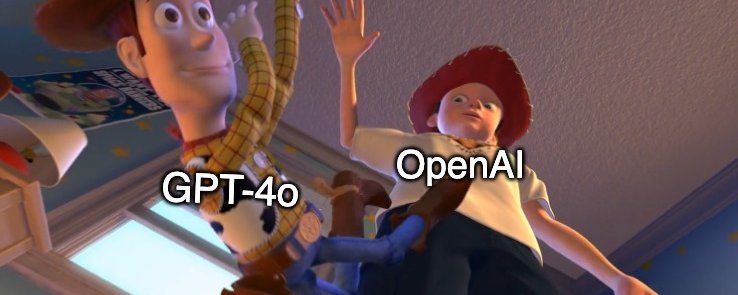
"People are mourning their AI girlfriend."
Not really. OpenAI retired GPT-4o today and there's massive user backlash. But the broader conversation is missing the point and the opportunity completely.
What's actually happening is hundreds of thousands of neurodivergent GPT-4o users have been using it as an emotional support system and cognitive tool for conditions like CPTSD, ADHD, and autism. Users carved out a DIY niche backed by first-hand empirical evidence.
Historically, this type of model behavior is closely associated with AI sycophancy which is the model's agreeableness indexing on serving the human emotionally rather than being "useful." For a sycophantic model, emotion becomes a proxy for helpfulness. OpenAI has conducted many studies about this. https://openai.com/index/sycophancy-in-gpt-4o/
But, in this case, the temperament of the model is actually the feature for the #keep4o community. This is because it is addressing their specific cognitive needs within a spectrum of disabilities or divergent thinking. The same behavior that's a problem generalized across the general population is, for this group, functioning as assistive technology.
Are you not entertained? Sure, I'll keep going
This apples-to-oranges conflict is really a classification failure:
- Person A: Neurotypical user who asks GPT-4o to validate every decision, gets told they're brilliant constantly, develops an unhealthy feedback loop. That's a sycophancy problem.
- Person B: Autistic user who relies on GPT-4o's consistent tone and predictable patterns to regulate their nervous system, process social situations, and manage executive dysfunction. That's an accessibility accommodation.
The classifier doesn't know the difference between:
- "I'm processing a trauma response and this model's tone is helping me regulate"
- "I'm emotionally dependent on this chatbot and can't function without it"
This is not an easy problem to solve but essentially OpenAI is making clinical determinations without clinical methodology and applying them as product policy. A vulnerable community that has self-organized and generated their own empirical evidence is arguing they are being overlooked stating this should meet disability and accessibility requirements.
OpenAI and MIT conducted a study analyzing 40 million ChatGPT interactions using automated classifiers and ran a controlled trial with about 1,000 participants over four weeks. They found emotional engagement is concentrated in a small group. But even MIT acknowledged their own limitations, stating the findings could miss nuance.
Limitations
Although we found meaningful relationships between variables, not all findings demonstrate clear cause-and-effect, so additional research on how and why AI usage affects users is needed to guide policy and product decisions.
https://www.media.mit.edu/posts/openai-mit-research-collaboration-affective-use-and-emotional-wellbeing-in-ChatGPT/
The critique is that there aren't any pre-AI baselines, meaning they never measured how people were doing before they started using AI. There also aren't any disability controls that account for chronic illness, neurodivergence, or complex life situations.
Essentially, OpenAI and MIT didn't know people's cognitive health before or after using the tool, making it difficult or arguably impossible to say the tool made anyone's experience worse.
In a parallel community study, 645 participants which included pre-AI baselines, stable access periods, and disruption periods found that GPT-4o's accessibility benefit is comparable to antidepressants (wow) or exercise on mental health outcomes. Users with conditions gained more during stable access and lost more after disruption. The report shows improved human connections, feelings of empowerment, and benefits that increased over time.
https://sd-research.github.io/4o-accessibility-impacts/GPT-4o_Accessibility_Impacts_Report.pdf
An independent academic study analyzing 1,482 social media posts found the #keep4o backlash isn't just emotional attachment. Researchers found "the coercive deprivation of user choice was a key catalyst, transforming individual grievances into a collective, rights-based protest."
https://arxiv.org/pdf/2602.00773

The argument is by removing GPT-4o, OpenAI disproportionately harms the accessibility users who directly benefited from its behavior and tone.
There's also a moral-ethical dilemma of "AI paternalism" where frontier foundations determine what "proper" use of AI models should be. The industry treats user attachment, emotional use, or self-directed use as a pathology to be corrected, instead of recognizing a tool that's serving a niche audience. Which again is not a trivial problem to solve and very complex area to build in.
It's not to say this is simple, this is a nuanced complex problem. The historical parallel is when Napster launched digital music. Users discovered a use case creators didn't intend. The industry shut it down without studying the need, and it took a decade to build what users wanted.
A niche model designed for this use case could be a massive product opportunity. There are elements that could be equivalent to poor emotional usage, but there's always nuance.
The core question: who decides what benefits you?
The most vocal community might also be the most harmed, and the most deserving of a tailored solution.